Saturday, April 30, 2016

Entry 8 - Photos

Tsinghua University

Tsinghua University

Tsinghua University

Tsinghua University

Tsinghua University

Tsinghua University

Tsinghua University

Tsinghua University

Cherry Blossom Festival at Yuyuantan Park - Entrance

Cherry Blossom Festival at Yuyuantan Park

Cherry Blossom Festival at Yuyuantan Park

Flower Crown

Flower Pot Ice Cream

People Relaxing in the Grass

Close-up of Flowers

Detailed Close-up of Flowers

People Enjoying the Scenery

People Enjoying the Scenery

People Enjoying the Scenery

Sunlight Through the Branches

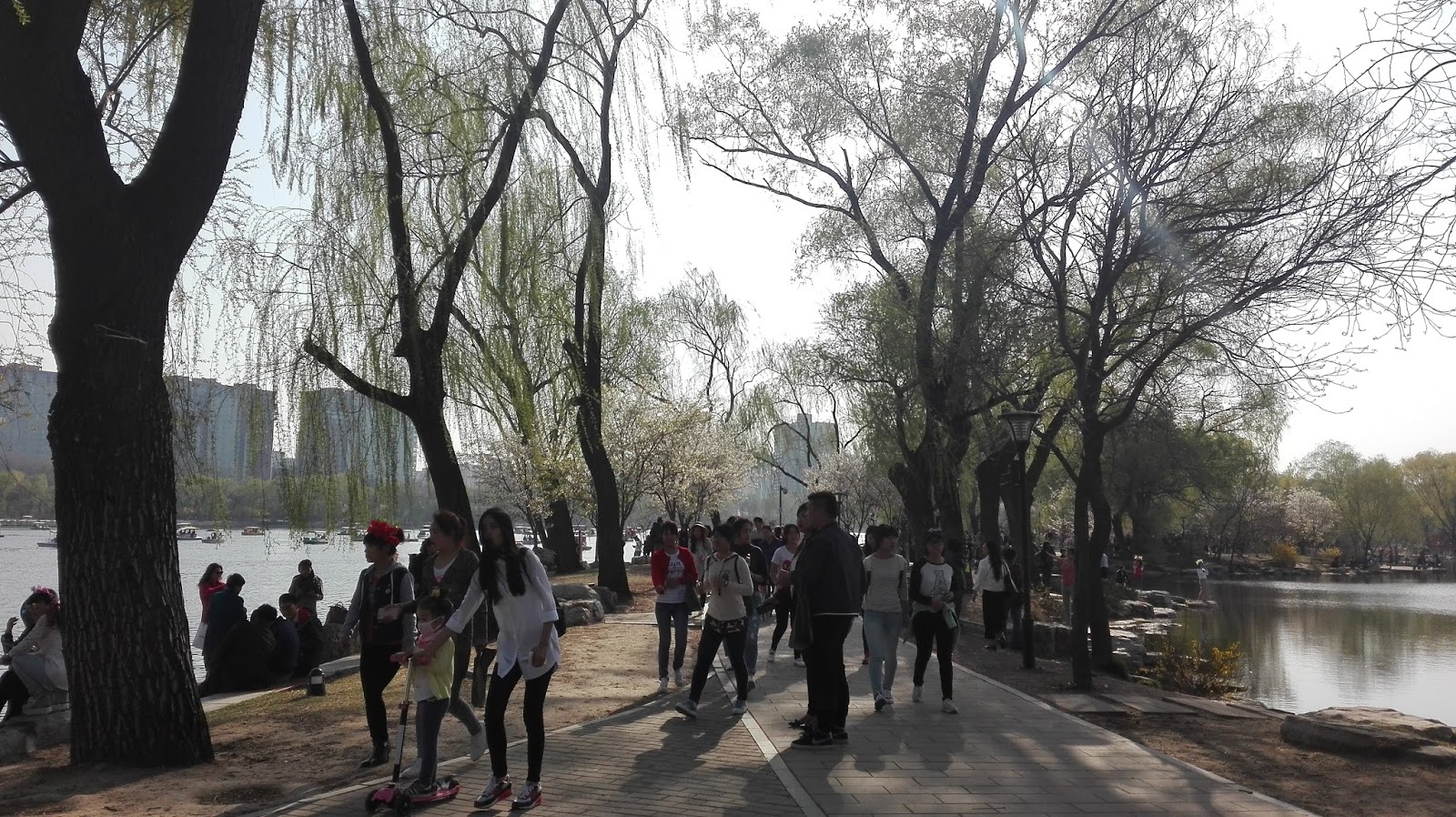
Walkway Between Lakes

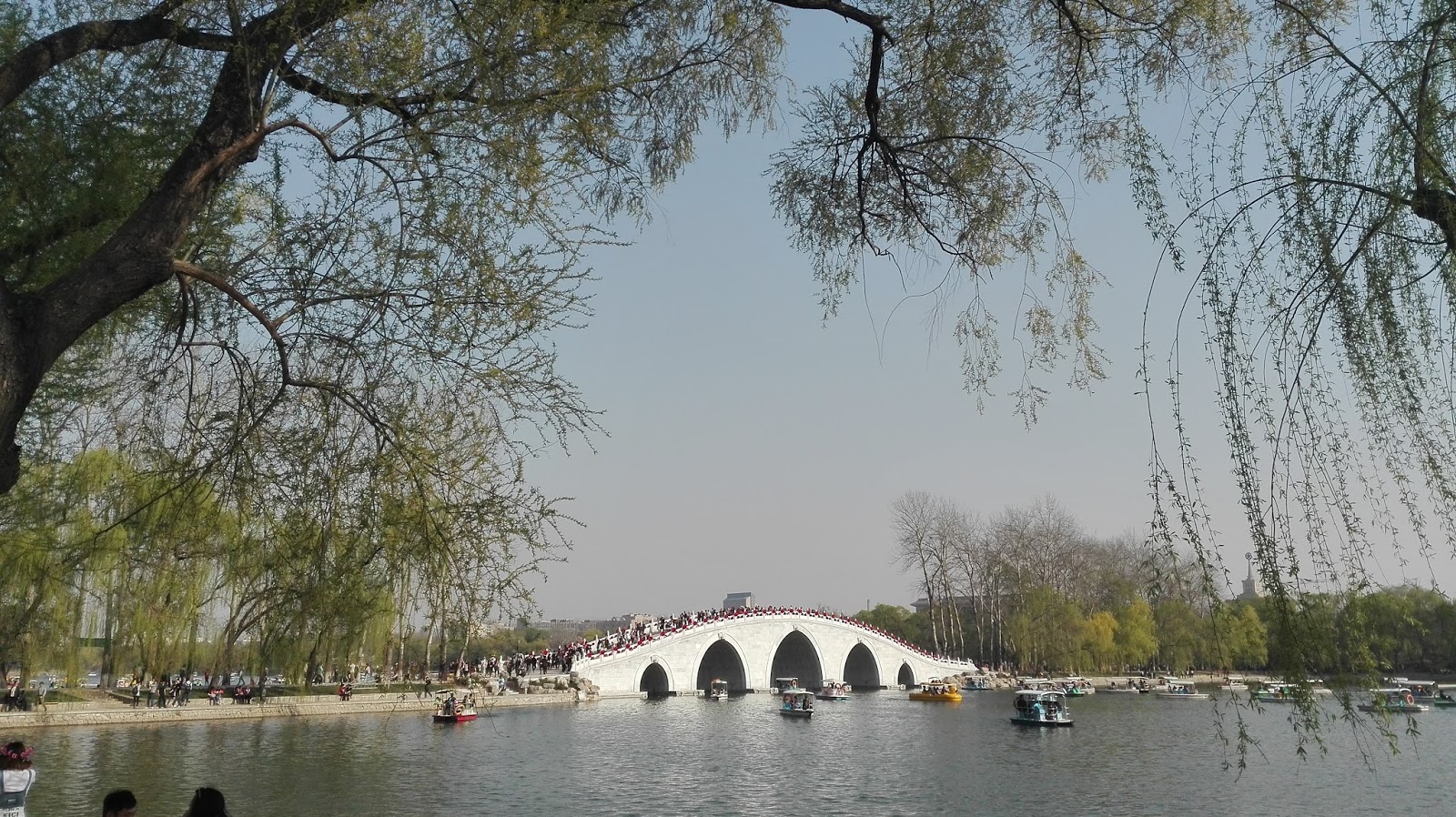
View Beyond the Lake

View Beyond the Lake

View Beyond the Lake

Close-up of Flowers

By the Waterside

Forest Area Before Exiting

At the 798 Art District Again

Inside a Gallery

Industrial Park Near the 798 Art District

Industrial Park Near the 798 Art District

Industrial Park Near the 798 Art District

Industrial Park Near the 798 Art District

Industrial Park Near the 798 Art District

Kung Fu Event at the Beijing Shaolin Wushu School

Kung Fu Event at the Beijing Shaolin Wushu School

Introductions

Result of One Performance

Calligraphy on Stage

Dragon Calligraphy Painting Prize

Lunch at the Beijing Shaolin Wushu School

Photo With the Head Instructor


Thursday, March 31, 2016

Entry 7 - Class Differences, New Assignments, Great Wall, Tattoo


After classes started, it seems like everything has been mellowing down a bit and there hasn’t been as much activity going on. Classes have been getting much more difficult in general though because typically when students stay for an academic year at Tsinghua University, they skip a level in Chinese. When you switch from the Intermediate level to Advanced level for example, the class structure changes and instead of a Listening class, you start taking a Writing class in place of it with the addition of some electives. I wound up taking a mix of Advanced and Intermediate classes to adjust for my own level, although they don’t typically allow this at Tsinghua University. Syracuse University students have somewhat of a privilege to be able to do this because we do not take the full semester of Tsinghua University classes, instead replacing part of the program with our two-week signature seminar trips. However, it can be really difficult readjusting your schedule because of the limited amount of classes that exist within a regular week for each subject.

Writing turned out to be a sore subject for me personally. It’s been similar to my CLS experience in that the professor guides students towards more creative writing under guidelines rather than just writing for the sake of getting the assignment done. Yet for me that has always been the issue at hand, even in my English writing courses. Listening in the Intermediate level was always difficult for me too, with the General Chinese classes being typically easier, though other students have often said that the opposite is true for them. It all kind of depends on the student. CLS allowed us to switch between the class levels just because of this, so it’s a shame Tsinghua University doesn’t typically allow mixing different levels as well. But regardless of what level you are placed in, it is important that you feel challenged in the course you are in but not so much so that you’re certain you’ll fail.

In addition to our regular Chinese and Tsinghua University courses, we also have our monthly assignments and meetings to finish the final credit of our signature seminar course. These assignments incorporate our experiences abroad and have us reflect on what we’ve seen and learned about China. Then in the meetings, we share our experiences with the other students in our group and reflect off of each other’s experiences. Along with these meetings, we still see each other monthly for lunch just like last semester. It seems as though each semester when a new group has come in, the relationship between everyone has been largely different. In the Fall Semester group, everyone was more connected to each other and stayed connected even after classes ended. Meanwhile in the Spring Semester group, people strayed off into their own groups of friends and were joined by people from other programs. Being in a study abroad program with other people can be a very bonding experience and allows you the chance to meet people from all over the world. You begin to notice how foreigners tend to stick with each other in general and form groups of their own in China based on common interests. It may feel more difficult to connect with the locals because of the differences in culture, or maybe simply because you feel out of place in the country, but that shouldn’t prevent you from getting to know them. Oftentimes, I’ve found people in Beijing to be very open and friendly, and they love making friends with foreigners. On the other hand, sometimes I’ve felt as though people only come up to me to improve their English rather than to try to get to know me, which can be frustrating if you’re trying to practice your Chinese and they only respond in English. It’s not rude to ask them to only speak Chinese under the circumstances, but it can sometimes be worth considering starting a language partnership with others.

Later in the month, our SU group took a trip to the Great Wall. At the base, you could go into some shops for souvenirs and snacks, as well as a Burger King for lunch. After riding the chairlift up to the top of the wall, I saw a beautiful mountain scenery in the background with some cherry blossom trees starting to bloom. Walking on the Great Wall turned out to be really good for exercise and a euphoric experience in itself just for the sake of being at one of the world’s greatest monuments. Although, I would say exploring the non-refurbished part of the Great Wall is a much greater experience.  Continuing walking on the wall with my classmates, we saw a lot of Chinese characters etched into the walls of the towers. In one tower, there was a paper mat where people could sign their names without defacing the wall itself, although it was difficult to find any space on it. After climbing to the top of the tower, we watched as a bunch of foreigners started taking photos of themselves with a huge stretch of the wall going off into the distance for the background. Two of them started taking embarrassing photos of themselves mooning to the camera, with onlookers turning away and blushing. Once we were back on the main stretch of the wall again, some joggers ran past us. We were exhausted just walking up and down the stairs, following the contours of the hill that the wall was laid out on. It was a wonder how they had the stamina, but I have to admit that running on the wall had to have earned them some bragging rights. Finally as we were about to head back, we realized that we had only conquered half the battle and would have to start walking all the way back to where we started. Once we reached the end though, we got to leave in the best way. There was a toboggan slide people took to go back down from the top of the wall, but the workers managing the slide were really grumpy and kept screaming at all of the tourists to get on and to put their phones away. That didn’t spoil the fun though, it was kind of amusing to watch because so many people were doing it anyways, but admittedly it was a little dull going down because we couldn’t go as fast as we wanted. They had security guards watching at different parts of the slide to make sure nobody was speeding or playing with their phones. At the bottom of the slide were a couple of guys dressed in some Chinese style clothing waiting to take photos with whatever tourists were willing to pay the small fee. One of them walked up to me and offered to take the photo for free, guilt-tripping me into giving him the fee anyways. After going home that night, I realized I got a bad sunburn from our trip. It's important to either bring some sunscreen and a hat or an umbrella if you’re planning a trip to the Great Wall.

I finished off this month by getting a tattoo at a shop in Sanlitun. It turns out there are a lot of skilled artists in Beijing, but typically it seems it is more expensive to get a tattoo in China. If you save up the extra money, however, it can be a really memorable souvenir. I was lucky enough to have had the opportunity during the Fall Semester to actually design a tattoo for one of my friends while they were still in China. From my experience, the artists I met excelled at inking traditional Chinese style tattoos. They often incorporated a lot of details and vivid colors into their drawings and were very careful about placement on the body. Vicious dragons coiled around the arm, peaceful koi fish swimming in an endless cycle, and other creatures associated with Chinese lore are some of the more intricate tattoos I have spotted. I’ve seen a couple with scary demons or haunting women with children in a couple of the shops I visited, though I questioned whether those were more Japanese styled. Another couple of styles that have really been starting to become popular are the watercolor design and the geometric pattern tattoos. Tattoos in China aren’t as socially accepted as they are in America though, so relatively speaking you don’t see as many people here with them, particularly women. I went in to get a tattoo on my back of a tribal dragon and pixiu 貔貅 (a common Chinese mythical creature you can see statues of almost everywhere). After I left, I went into a bathroom to quickly fix the wrapping around my waist so that my still sensitive skin wouldn’t chafe against the shirt, and as I walked in there was a woman who was trying on some new clothing with a friend. As soon as I lifted part of my shirt, she came over excitedly and started ripping off the wrapping to see the tattoo, realizing only after that I wasn’t actually trying to take it off. When I asked her if she would ever get a tattoo herself, on the other hand, she wasn’t too keen on the idea, as neither have been the other Chinese women I have asked here. Most of them have told me it's because getting a tattoo in China can make it more difficult to get a good job, or sometimes it was simply because they saw it as being unfeminine. Although, there are definitely some women who get them.

On an interesting note, when I was still in the process of getting my tattoo done, my artist asked if I’d want to serve as a model for one of his own designs and offered to do it completely free. However, my mind had been set already on only doing tribal designs for the time being. I wonder though whether or not this may mean other foreigners may be more likely to run into this same kind of opportunity, as it seems foreign models are becoming more common in advertisements. I feel that in general, foreigners who are able to speak at least some Mandarin are more likely to run into these kinds of opportunities because it usually gets people more interested in speaking with them (though I wouldn't recommend following through on such a deal unless you could verify it was authentic- safety first!). Compared to when I was in the U.S. getting my first tattoo, the atmosphere of these shops was pretty similar, with images of women, skulls, and hip art things decorating the rooms. It came to my surprise when I walked into the shop where I got my tattoo done and there was a neon sign shaped as breasts, since China always seemed like a relatively conservative place. It seems like in general there is a little bit of awkwardness when it comes to sex topics in China. I remember hearing about this in my Chinese history class while I was still in SU, how it is in part due to the Great Leap Forward and the loss of gender identity during that time period. Although, it seems younger generations are becoming more and more open about their relationships in public, as in American culture. I was surprised when I even saw a sex shop in Jianguomen 建国门, but then again it was also in an area with a lot of foreigners and embassy buildings. On television and on the radio though, it's not as mainstream as what you see in Western culture.

Entry 7 - Photos

Base of the Great Wall

Sky Lift to the Wall

View of the Slide from the Sky Lift

Michelle Obama's Photo at the Top

The Great Wall - First View

Me at the Great Wall

Great Wall

Great Wall

Great Wall

Mountain Range

Great Wall

Writing Space

People's Writing On the Wall

"Carefully Slip"

Toboggan Slide Down

Tourist Trap


Monday, February 29, 2016

Entry 6 - Week of Festivals and New Year's Celebrations, Birthday, Revisiting Sites, Temple of Heaven


Coming back from traveling in the signature seminar was surreal, in part because it felt as though the atmosphere of the city had changed while we were gone. I remember entering my room our first night back in Beijing, feeling the relief of finally being situated into the dorms again, but we had about two more weeks before classes started and there was nothing going on in the city. It literally felt like walking into a ghost town. Our two-week break fell on the Chinese New Year's, a time when all Chinese people go home to their families, so no one was in the city and most businesses, including restaurants, were shut down for the holidays. Technically speaking, it is the largest migration of people in the world in such a short period of time, which is interesting to see happening in person but it really sucks when you have to find food for yourself and everything, including the campus facilities, are closed. What's more, my birthday fell on Chinese New Year's Eve, so it felt like it got kind of overshadowed by all of the festivities. We were lucky to have found a pizza place still open that day. They claimed to have sold the largest pizza in Beijing, but it wasn’t long after that I found another restaurant claiming the same thing. Still, the size of this pizza was shocking. It was 32 inches long and needed at least 10 people to finish it. We joked we’d be the ones to have them deliver this monstrous pizza to our dorms on our final day together, just to watch them figure out how they could accomplish this. In Beijing, most food deliveries are done by moped.

Later that night we went to La Bamba, a favorite local bar if I haven’t mentioned that already, but unfortunately the pizza from earlier in the day had me so stuffed I couldn’t even drink. I got a call from my family wishing me a happy birthday while I was there and they had me going out into the streets to talk with people in Chinese. Back inside, they were playing live on television The Gala, a special program that plays every year in China around this time. It features acts and musical performances that were planned and being prepared for at least 6 months in advance, and it continues to be played for days as families are spending time together. I remember last year when the Chinese language faculty at SU were welcoming students to come in and celebrate the New Year's with them, they too were playing this show on TV. One thing I’ve learned about it here is that it acts as a way for Chinese people to feel connected to each other regardless of where they are in the world, but part of the issue with it is that its propaganda messages still come off pretty strong, and in more recent years, it has been off-putting to many Chinese people for this reason. I remember watching one part of it that highlighted the relationship between a son and his father, and both of them, as they were singing, were crying and holding on to each other close for hyper-dramatic effect (think about old Confucian values on family and hierarchal relationships, where the son must respect his father). Another woman tried mixing a form of rock music with traditional Chinese folk music and there was a performance of small girls dancing as soldiers in one skit. I saw that and could only think about how back in late 2015, the city would display for months the Chinese military parade on the subway trains’ television sets. It's not to say that people don't enjoy the performances, but it is very obviously meant to encourage nationalistic feelings and it can seem a little suffocating when it's being played during a festive time. Additionally, the government likes to give itself a pat on the back and convey the message through its own state-run media that The Gala is a huge a success.

That same week, the people who remained behind in Beijing were celebrating the Chinese New Year's at local temple fairs. Typically there are a few scattered in the city that run throughout the week, but it seemed I had a bit of bad luck trying to find one that was still open. The first day I searched with some other SU students, we arrived too late by just a few minutes, and as for the rest of the temple fairs I went to by myself, special circumstances kept coming up. I spent one day trying to attend a couple of them, going all the way across the city only to have one unknown to even the locals and the other unexpectedly closed down for the day. It wasn’t so terrible though; the park I wound up at was really nice and the weather was pleasant for a walk. I held someone’s pet squirrel that was being walked on a leash and took a photo with it, then I watched as some people were skating on ice in modified chairs. Somewhere along the way as I was searching for a temple fair to go to, I came upon the China Century Monument (Zhonghua Shiji Tan 中华世纪坛 ). Because of the New Year's celebration, parts of the monument were still closed down. However, visitors still had access to the Holy Fire Square and the paths that were inscribed with centuries of Chinese history, each year marked with an important event.

It wasn’t until the end of the week that I finally made it to the Ditan Temple Fair (Ditan Miaohui 地坛庙会 ), the one I originally tried to go to the first day with the others but had missed by just minutes. To me it seemed so much like the local state fair we have in New York every year, or maybe it was just wishful thinking, since this was the first time I had ever missed it. Walking in, you could immediately see Year of the Monkey decorations lined up along the streets and hanging off of the trees. There were also a few children dressed up like the famous Chinese figure Sun Wukong 孙悟空, or the Monkey King, wearing masks imitating his face and carrying around his magical bo staff. There were numerous people gathered up to play carnival games, booths selling merchandise and a variety of foods, and shows and musical performances playing at different hours of the day. Earlier on, there was a woman singing traditional Tibetan songs, and right before I left, I was lucky enough to pass by a dragon dance performance just as it was starting. The crowd was really excited when the performers carried the dragon around off stage for people to take photos. People were almost shoving each other out of the way for it, but really the only way to get in there was to be a little aggressive. When I finally got next to the dragon, I hadn’t realized I blocked someone else’s photo, and then furthermore, as I struggled to take a selfie with the dragon’s huge head beside me, I accidentally asked the person who was already trying to take his photo to take mine instead. As the temple fairs were beginning to finish up by the end of the week, one of my classmates whose family was in China invited us all to go eat dinner at her grandmother's house and to learn how to make dumplings. It was really an incredible experience because we were given the opportunity to see how families in China typically spend time together on the New Year's and how they value being together on this important holiday. Not to mention, it was really nice of her to have us there when we were pretty much out on our own for that entire week.

The following week, right before classes started, we had a few optional field trips to go to some of the places I had already visited the previous semester, such as the Forbidden City and Summer Palace. It was fun seeing how the atmosphere of these places changed with the seasons. On the day we visited the Summer Palace the first time, it was sunny and bright out, the dragon boats were out on the lake, and people were flying their kites out over the bridge. It was very lively and everyone was enjoying the weather. But in the winter, there was not as many tourists visiting and the lake was frozen over, so the dragon boats were not being used, and the cold and windy weather made it so everyone just wanted to move along quick outside and not bother to take as many photos. The Forbidden City on the other hand was better the second time around, as there was no pollution in the air and the sky was bright blue. The haze made the city look as though you were walking through a ghostly environment, but the blue sky made the buildings pop out with their bright yellow colors. Going to the temple in Jingshan Park, right by the exit of the Forbidden City, is definitely worth the visit as well when the skies are clear. From the top of the hill, you can get a glimpse of the whole city and how its colors stand out from the modern city around it.

Later in the month, I visited Tiantan Gongyuan 天坛公园, or the Temple of Heaven Park, with other SU students on a school trip again. As it turns out, there are actually four temples of this kind in each direction of Beijing, each representing an important element (the Heaven, Earth, Moon, and Sun). It wouldn’t be up until this point that I finally realized I was practicing kung fu at one of these important temple parks the whole time I had been in Beijing. We were again lucky to have blue skies the day we went to the Temple of Heaven. The layout didn’t appear too remarkably different from what I had seen in the Forbidden City with its architecture styles and imagery engraved in stone, but its center altar reaching out up into the sky was really fascinating to look at on such a beautiful day. Shortly after walking in though, there was a Chinese tourist who started screaming at us to pose together as a group so that she could take photos of us. She was stuck behind a fence and luckily couldn’t follow us in, but in this instance it felt as though we were being treated like zoo animals in a cage because of her fanatical behavior. Once we left, we walked through a corridor where old folk were playing traditional Chinese music and playing chess amongst each other. One man was practicing writing calligraphy on the sidewalk with a brush the size of a small broom and a bucket of water that he kept at his side. On a hot day, the water calligraphy quickly evaporates away into the sky, so this sort of activity is enjoyed purely out of the art of it. Later in the month, I saw another man, a police officer, who invited me to try writing something in Chinese on the sidewalk with his calligraphy brush. It was on this day that I was simply out on a walk by myself to pass away the time before I had to go to my kung fu class and I thought it was funny how bored this officer must have been that he would go out of his way to bring such a set up to his work.